What it costs
Eighty a visit, or a lot less on a plan.
How much
$80 drop in
or from $39 a month on a membership
Four drop ins are $320. Four on the membership are $129. If you come in regularly the plan is the cheaper path by a wide margin, with no lock in.
If you come in occasionally, eighty dollars a visit is the rate and there is nothing to sign. If you come regularly, the membership is dramatically cheaper and we would rather you knew that than quietly paid the single visit rate twice a month. Four adjustments at the single session rate is $320. The same four visits on the adjustment membership are $129. Two visits a month are $70 against $160. One visit a month is $39 against $80.
There is no lock in and no visit you have to use or lose. The membership exists because a meaningful number of patients respond well to manipulation and want it on a rhythm, and charging them full single visit pricing for that would be taking advantage of a preference we created.
A doctor of physical therapy doing this is not a chiropractor doing this
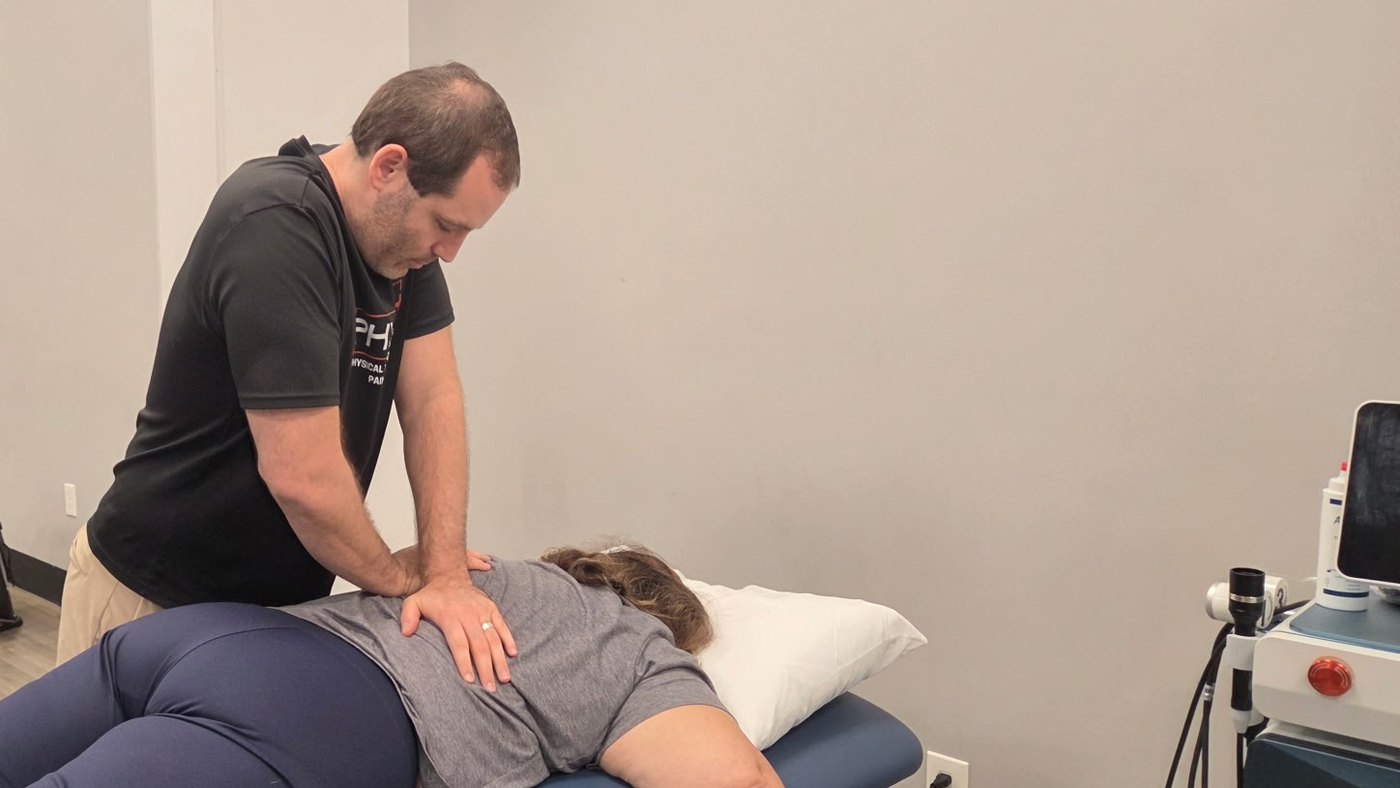
Spinal manipulation is a technique, not a profession. Physical therapists are trained and licensed to perform it in Texas, and the thrust itself is largely the same skill in either set of hands. The difference is what surrounds it. Here the adjustment is one item inside a plan of care that is mostly loading and movement, and the goal is explicitly to need fewer of them over time, not more. You will not be sold a package of thirty visits, and nobody will tell you a vertebra is out of place.
What manipulation actually does is less dramatic than the marketing around it and more useful than the sceptics allow. It produces a short window of reduced pain and improved mobility in a segment that has become guarded. That window is the point: it is when the strength and movement work lands best. Used that way it is a genuinely good tool. Used as the whole treatment, it becomes a subscription to feeling briefly better, which is the pattern that gives the technique its reputation. The science of adjustments goes deeper on the mechanism.
Manipulation is not appropriate for everyone. We screen for osteoporosis, inflammatory arthritis, recent fracture, anticoagulant use, vascular risk factors in the neck, and progressive neurological signs, and there are patients we decline to manipulate and treat a different way instead. Cash rates for everything are on the insurance and cash pay page.