Neck pain + headaches
Can neck pain cause headaches? Where myofascial pain fits.
Your neck can contribute to a headache. Tightness alone does not prove that it does. If you keep rubbing your traps and the headache keeps returning, the next step is to understand the pattern before choosing a treatment.
“My neck is tight, so that must be the cause.”
It is a reasonable connection to wonder about. Some headaches originate in neck structures and are called cervicogenic headaches. Neck movement can change symptoms, but this clue overlaps with other headache types. An examination and your history matter more than a symptom checklist. [1]
What does myofascial pain mean?
The term refers to muscles and their surrounding connective tissue, or fascia. When clinicians discuss cervical myofascial pain, they are considering pain associated with the muscles around your neck, sometimes with tender areas described as trigger points. That is a possible part of an assessment, not a diagnosis you can make by finding a sore spot.
The International Headache Society places headache attributed to cervical myofascial pain in its appendix because the evidence and classification remain uncertain. It specifically notes disagreement about trigger points and variable treatment responses. That is why “your fascia is causing your headache” is too definite without an assessment. [2]
“If massage helps, that proves it was a muscle.”
Temporary relief is useful information, but it does not establish the whole cause. Tell your clinician what helped, how long the change lasted and whether your headache returned. A response to hands-on care is one clue to consider alongside other findings. It is not a reason to stop investigating a new or changing headache. [2]
Your headache and your neck can need different attention
Neck symptoms do not automatically rule out migraine or tension-type headache. A clinician considers your headache features and neck findings together, including whether another explanation fits better. [1]
Write down when your symptoms start, where you feel them, how long they last, whether neck movement changes them and any accompanying symptoms. Include medicines you take and what happens after treatment. Bring that record to your appointment rather than trying to choose a diagnosis from search results. A headache diary can help identify patterns. [3]
Why do your neck and shoulders feel stiff with a headache?
“Tight” and “stiff” describe what you feel; they do not name a diagnosis. You might notice a pulling feeling across your upper shoulders, difficulty turning your head or soreness near the base of your skull. Those details are worth discussing, especially if the same pattern keeps interrupting work, sleep or driving.
Be specific about the task that changes your symptoms. Does a headache begin after a long stretch at your desk? Does looking over your shoulder reproduce familiar pain? Does a short break change it? These observations help guide an examination. They do not prove that your posture damaged your neck, that one muscle is responsible or that you need to force a stretch.
If you also have shoulder pain, arm symptoms or back pain, mention them rather than treating each sore area as an unrelated problem. The point is to describe the whole pattern, not assume that every symptom comes from the same place.
“I thought it was vertigo. Could it be my neck?”
Vertigo describes a false sense of movement, often spinning. It is a symptom, not the name of every condition that can make you dizzy. Feeling lightheaded, unsteady or as though the room is spinning gives your clinician different information. Inner-ear disorders, migraine and other medical causes can require different assessments. [5]
Neck pain and dizziness can happen together. That does not establish that your neck caused the dizziness. The Bárány Society, an international vestibular expert group, states that evidence for a direct mechanism linking neck problems to vertigo is lacking. Turning your head may also aggravate a vestibular disorder, so “head movement makes it worse” does not settle the diagnosis. [6]
If you were told you do not have one particular inner-ear condition, ask what was tested and what the next step is. Do not translate that result into “it must be tight fascia.” For an appropriate next step, explore dizziness and balance concerns and vestibular physical therapy. New, severe or changing symptoms may need medical assessment before rehabilitation.
Your tests were normal. Why do you still have symptoms?
A reassuring test result can be useful without explaining everything you feel. Different balance tests examine different parts of the system, and your provider interprets results alongside your history and examination. There is not one test that answers every question about dizziness. [5]
Similarly, a normal neck scan does not assess every aspect of movement or function. An abnormal scan does not establish the cause: upper-neck findings also occur in people without headaches. [1]
Your symptoms still deserve attention. Bring the actual report and ask: “What does this result make less likely? What has not been evaluated? What should we do if I am still having symptoms?” A follow-up conversation is more useful than repeating the same treatment because a search result says your tests missed a trigger point.
Keep any recommended medical follow-up. A negative test for one suspected diagnosis is not an all-clear for every future symptom, and it is not proof of a muscle or fascia diagnosis.
What should your assessment help you understand?
Start with the question that brought you in. “Why does my neck feel tight?” and “Why do I feel dizzy when I move?” can need different investigations. A useful physical therapy assessment considers whether your presentation is appropriate for PT and whether another clinician needs to be involved.
- Your timeline: when the headache, neck pain and dizziness began, and whether they started together.
- Your pattern: frequency, duration, location, triggers and what changes symptoms.
- Your accompanying symptoms: vision changes, nausea, hearing changes, arm symptoms or balance difficulty.
- Your prior care: tests, diagnoses, medication changes and which treatments helped or did not.
- Your daily limits: the work, sleep, exercise or driving tasks you want to manage better.
Ask for the reasoning behind the plan, not just the name of a treatment. You should understand what is being addressed, what you can monitor and when a lack of progress should trigger reassessment. Read what to expect at your first Physio+ visit, including time for your questions.
Do not explain away vision changes as tight traps
Seek urgent medical advice for a headache with new blurred vision or other eye symptoms. New dizziness also deserves medical attention rather than an assumption about fascia. Call 911 for a sudden, extremely severe headache, loss of vision, weakness, trouble speaking, confusion or new difficulty walking. A headache with fever and a stiff neck also needs emergency assessment. Do not drive yourself if you need emergency care. [3]
Where physical therapy may fit
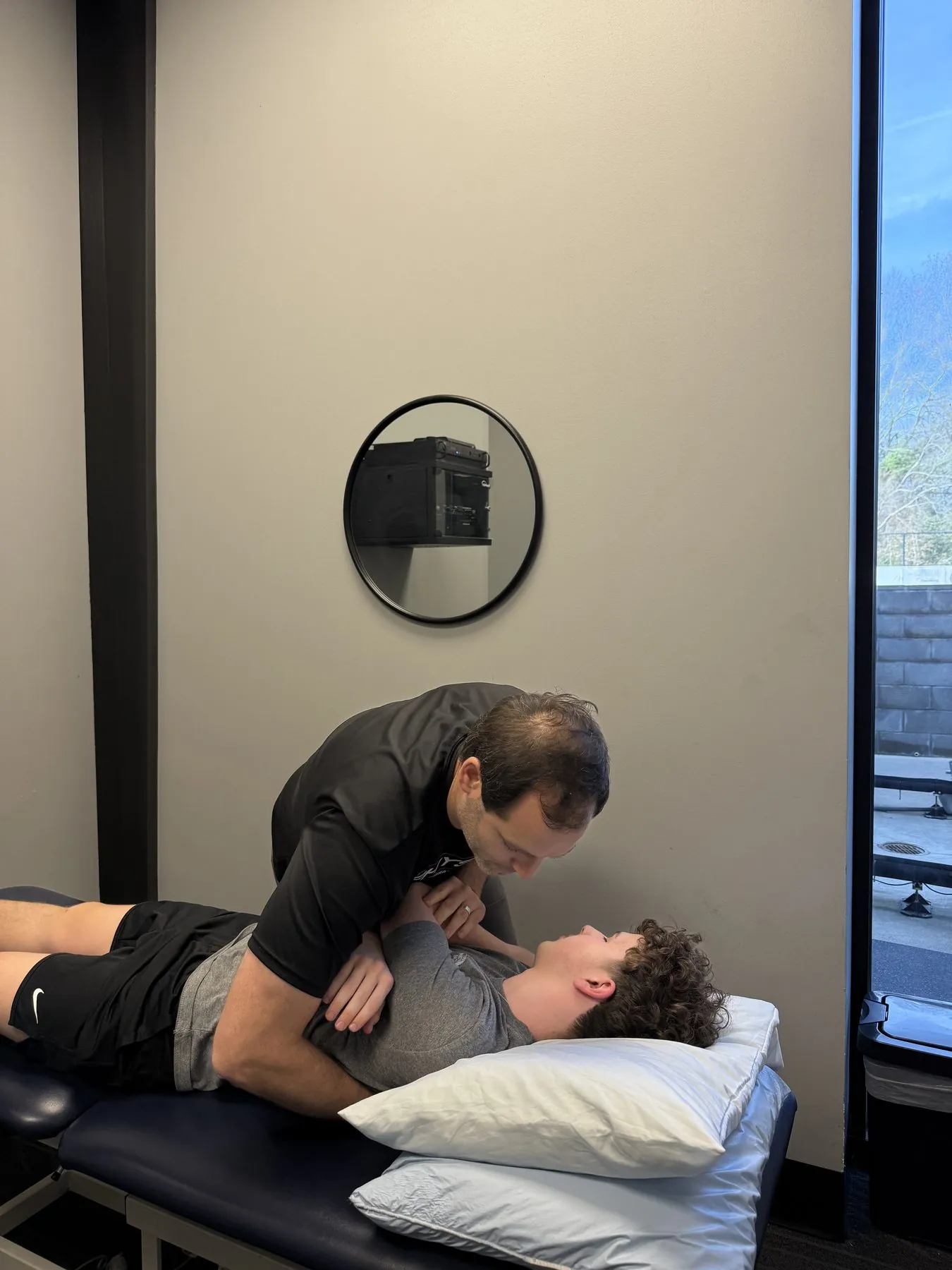
If your assessment identifies a neck-related contribution and physical therapy is appropriate, your plan may include movement and exercise progressed to your tolerance, with other treatment based on the findings. Physical therapy is one option for cervicogenic headache; it is not the right starting point for every headache. Your clinician may recommend medical assessment or care alongside PT. [4]
Your goal should be a plan you understand: what is being treated, what changes to watch for and when to reassess. Ask how you will measure progress beyond how your neck feels immediately after a session.
Where does dry needling fit?
Dry needling is an intervention some trained physical therapists use within a broader treatment plan. A tender neck or shoulder does not automatically mean you need it, and a response to needling does not confirm why you had a headache. Ask what benefit is expected in your case, what the risks are, what alternatives you have and how it fits with active rehabilitation. [7]
Can massage or manual therapy help?
Massage and manual therapy may be considered when appropriate. Research into massage for headaches has limitations, and results vary. Feeling better after a session can matter without establishing that fascia was the underlying cause. Discuss whether hands-on care is helping you function better between visits, not only whether it feels good in the room. [8]
Neither service replaces assessment for unexplained dizziness, a new headache pattern or concerning neurologic symptoms. You can ask about treatments before choosing them; booking an evaluation does not require you to choose a procedure in advance.
Questions about neck pain and headaches
Can tight traps cause a headache behind your eye?
The location of your headache alone cannot identify its source. Neck-related headaches may travel toward the front of the head, but other headache types can overlap. Describe the location and accompanying symptoms to your clinician. New eye or vision symptoms need prompt medical advice. [1] [3]
Does a negative vertigo test mean you have cervical dizziness?
No. A negative result for one suspected condition does not prove a neck-related cause. Ask which condition the test assessed and whether further medical or vestibular evaluation is appropriate. [5] [6]
Should you keep stretching a stiff neck?
Do not assume that more force is the answer. If an exercise repeatedly brings on a headache, dizziness or worsening symptoms, stop that activity and ask for guidance. A plan should fit your findings and tolerance rather than a generic routine. [4]
Can you book an assessment before choosing treatment?
Yes. Your first visit is the place to discuss your symptoms and options. You do not need to decide on massage or dry needling before you understand the assessment. Use the calendar below or call the clinic with scheduling questions.
Bring your questions. Choose your next step.
Physio+ offers one-hour, one-on-one visits with a doctor of physical therapy in Lindale and Tyler. For a neck-related concern, explore neck-pain care or book an evaluation. Call or text 903.492.5215. Urgent headache symptoms need medical care first.
Book with Logan in Lindale
Logan Merritt is the founder of Physio+ and a Board Certified Neurologic Clinical Specialist. His credentials include PT, DPT, NCS and Cert. DN. Read Logan's background and areas of care.
Call 903.492.5215 or text the clinic for scheduling help.
General education, not a diagnosis or a personalized treatment plan.
Sources behind this guide
- International Headache Society: cervicogenic headache criteria and overlap.
- International Headache Society: cervical myofascial pain, appendix diagnosis.
- NHS: headache self-care and warning symptoms. Emergency contact adapted for the United States.
- Cleveland Clinic: cervicogenic headache assessment and treatment.
- MedlinePlus: balance tests, what they assess and how results are interpreted.
- Bárány Society position on cervical dizziness, author repository.
- American Physical Therapy Association: dry needling.
- NCCIH: headache research and complementary approaches.